



Website speed is a significant factor in your business’s success. An important fact, 40 percent of users abandon a website that takes over three seconds to load. As a result, websites that load slowly will have lower page visits, conversion rates, and bounce rates will be much higher.
Unfortunately, those with a slower website will have fewer page visits, lower conversion rates, and a higher bounce rate. The speed of your website will determine the number of emails and phone calls you get from potential clients.
The speed of your site will influence not only your user experience but also your traffic and Google page ranking, so you must ensure everything is in working order. It’s no wonder why close to 80 percent of website users say they wouldn’t go back to a website if they’ve had trouble with loading speed. They value websites being fast.
What is Website Speed?
First, we need to define page speed before getting into the exciting stuff. Page speed is a measure of how quickly content on your page loads, often referred to as load time. We can generate a site speed, which is the average page speed across a sample of pages on the site. There are many ways to test your site speed. Don’t worry; we have listed them later in this blog. However, first, we must look at the impact and importance of site speed on your website and how it can bring you triumph and heartbreak. A study conducted by Akamai found that 47% of people would expect a web page to load in two seconds or less. Therefore, having a fast and reliable web speed rate is essential.
Everything starts with your site speed. Not only does site speed affect and influence your audience rates and those who abandon your website, otherwise known as bounce rate. But it also affects your SEO ranking on search engines like Google. Google implements a strategy that makes websites faster and higher in search engine rankings.
Slow websites are slow because they’re inefficient. As a result, Google has to consume more bandwidth and ultimately spend more money. Every second they can save adds up quickly. Therefore, they’re promoting faster websites and significantly reducing their costs in the process. That said, Google will reward you if your site’s speed is faster than other sites’.
The two significant benefits of a fast website are improved user experience and a substantial impact on your SEO.
Website Quickness Testing Tools
- GTMetrix is a free tool (another huge benefit!). It will give you a grade for each understanding, color-coded according to whether they’re slowing your website down. When it has completed the site test, it will break down the performance insights, including the strengths and weaknesses. Therefore, you can keep all your positive aspects and improve on the other parts (and those that score lower).
- Lighthouse is another widely used, automated, open-source tool. It’s one of the most powerful web speed testing tools you will ever experience, which is why we would recommend it. Like GTMetrix, Lighthouse will give your site a rating out of 100 for each element. Like GTMetrix, it will provide you with a performance breakdown, with ratings based on how well your site performs. You can also check out your ratings for accessibility and SEO while you’re there too.
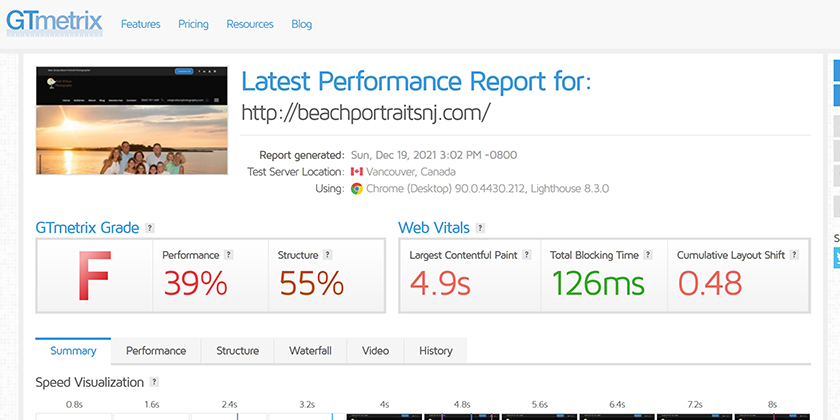
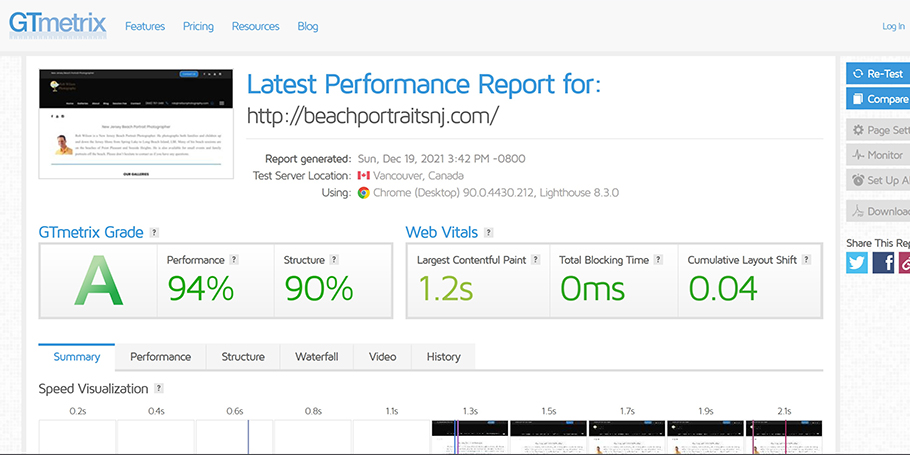
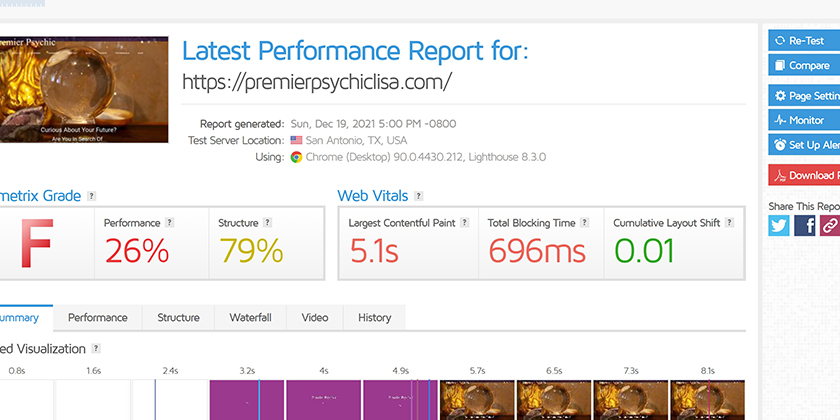
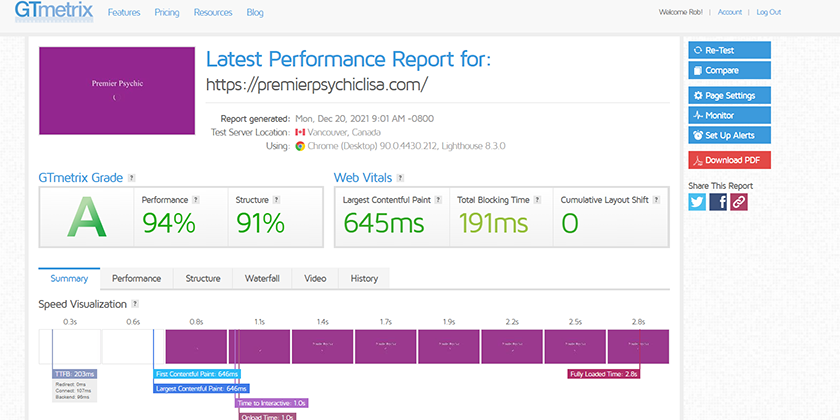
Below are before-and-after screenshots showing how we have helped clients like you speed up their websites.